
West Palm Beach Quality Septic: 7 Septic Mistakes That Cost Palm Beach County Homeowners
The habits that quietly turn a few hundred dollars of septic maintenance into a five-figure repair.
Septic systems rarely fail on their own. Most of the expensive failures in Palm Beach County trace back to a handful of habits, almost all of them cheap to avoid. The pattern behind nearly every one is the same: the tank is the part of the system that is inexpensive to look after, the drainfield is the part that is expensive to replace, and each of these mistakes lets damage reach the drainfield.
The whole of septic economics in one sentence: a $325 to $625 pump-out every few years protects a drainfield that costs $6,000 to $15,000 to replace in the ground, and $12,000 to $25,000 when this county's water table means it has to be raised.
1. Waiting for a problem before pumping
A septic tank gives no warning as it fills. It drains normally until the sludge layer climbs high enough that solids start leaving through the outlet, and by then the damage has begun. Those solids lodge in the drainfield, where nothing can remove them, and the soil clogs a little more with every load.
Instead: pump every three to five years whether or not anything seems wrong, and ask the crew to measure the sludge so you learn your system's real interval. The Loxahatchee River District advises checking the sludge depth every year and pumping every two to five years.
2. Driving or parking over the drainfield
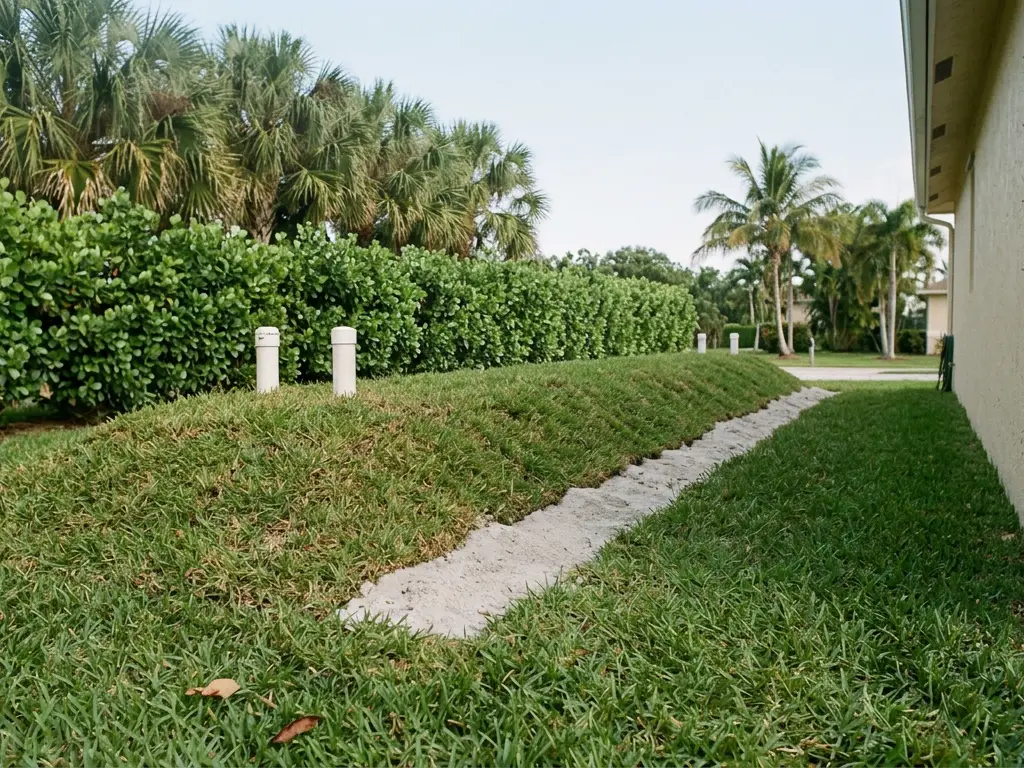
Vehicles, boat trailers and horse trailers crush drainfield lines and compact the soil a field depends on. On a large lot the field often sits exactly where it is tempting to turn a truck around. The damage does not show immediately; it shows months later as a wet patch or a slow house.
Instead: find out where the field is, mark its edges, and keep all vehicles off it, especially in the wet season when saturated soil gives way more easily.
3. Soaking the drainfield with irrigation
A drainfield's job is to send water down into dry soil. Sprinkler heads aimed at it, or a zone that runs over it every morning, fill that soil with irrigation water before any effluent arrives. In a climate where the wet season already brings the water table up close to the surface, it is capacity the field cannot spare.
Instead: set sprinkler zones to miss the drainfield, and keep the field's grass healthy but not heavily watered.
4. Treating the drains as a trash can
Wipes, including ones sold as flushable, do not break down in a tank. Neither do cooking grease, coffee grounds, cat litter, paint or solvents. Grease is the worst offender: it floats in the tank and, if a baffle is damaged, it travels straight to the drainfield and seals the soil.
Instead: trash for wipes and grease, a lint filter on the washing machine, and a check of the baffles and effluent filter at each pump-out.
5. Silencing the pump alarm and forgetting it
Many systems here have a pump that lifts effluent to a raised field, with an alarm on a control box. Silencing the buzzer is fine; forgetting about the light is not. The alarm means the pump chamber is filling faster than it is being emptied, and once the reserve above the alarm level is used up, the system backs up.
Instead: treat an alarm as urgent, not as a nuisance. Cut water use, check the breaker once, and have the pump and floats checked. A float repair typically runs $200 to $650; a flooded field costs a great deal more.
6. Pumping a flooded tank after a storm
It seems logical to empty a backed-up tank after a storm, but when the ground is saturated it can do real harm. Florida health officials warn that a tank pumped dry under an exceptionally high water table can be crushed, and pumping does nothing about the groundwater that caused the problem.
Instead: use as little water as possible until the flooding recedes, then have the system checked. The best time for scheduled pumping in South Florida is the dry season.
7. Building over the tank or not knowing where it is
Patios, pool decks, sheds and additions end up over septic tanks and drainfields when nobody knows where they are. Every future pump-out then starts with demolition, and a drainfield under a slab is a drainfield that cannot be repaired without tearing up what was built on it.
Instead: locate the tank and field before any building project, measure them from fixed points on the house, and fit risers so the lids sit at grade.
Why these mistakes cost more here
Florida requires a new drainfield to sit at least 24 inches above the wet season high water table. Across much of Palm Beach County, that water table can rise to within half a foot to a foot and a half of the surface during the wet season, so a failed field often cannot simply be dug back in. It has to be rebuilt higher, on imported sand, frequently with a pump. That is what turns an avoidable mistake into one of the most expensive repairs a homeowner here can face, and it is why the drainfield replacement page spends so much time on elevation.
A note for rural lots
On the rural lots around Palm Beach Gardens, such as those in Caloosa, homes rely on private wells and septic systems on the same property. Florida requires a drainfield permitted under the current rule to sit at least 75 feet from a private drinking water well. On those lots, mistakes two, three and seven carry an extra cost: a replacement field has to fit the setback as well as the water table, which can leave few places on the lot to put it.
The habit that prevents most of them
Keep a simple record: the date of each pump-out, the tank size, where the lids and field are, and what the crew found. A homeowner with that one page of notes rarely makes any of the seven mistakes above, and a buyer who inherits it knows exactly what they are taking on.
Questions about your own system? Talk it through on the phone.
Call (561) 658-4115Questions about septic mistakes
What is the most expensive septic mistake?
Letting the tank go unpumped until solids reach the drainfield. A pump-out typically runs $325 to $625; replacing a clogged drainfield typically runs $6,000 to $15,000 in the ground and $12,000 to $25,000 when it has to be raised.
Can I drive over my septic drainfield?
You should not. Vehicles and trailers crush drainfield lines and compact the soil, and the damage often shows up months later as wet ground or slow drains.
Are flushable wipes safe for septic systems?
No. Wipes, including those sold as flushable, do not break down in a septic tank and can clog pipes, baffles and filters. Put them in the trash.
Should I water the grass over my drainfield?
Keep the grass healthy but do not soak it. Irrigation over the field fills the soil with water the field needs for effluent, especially in the wet season.
Need the work done rather than explained?
Drainfield Replacement in West Palm Beach and Palm Beach Gardens, with a written price before anyone starts.
More septic guides
The Best Septic Companies in West Palm Beach
Local septic companies serving West Palm Beach, ranked by documented trading history, with no paid placements.
Septic Tank Pumping Costs in Palm Beach County
The typical price ranges for septic work around West Palm Beach, and the factors that push a quote up or down.
Palm Beach County Septic Tank Requirements
Who permits septic work in Palm Beach County, what the state rules require, and the deadlines that come with a sewer notice.
Signs You Need Septic Pumping in West Palm Beach
How to read what your septic system is telling you, from a slow drain to a pump alarm, before it becomes a backup.